
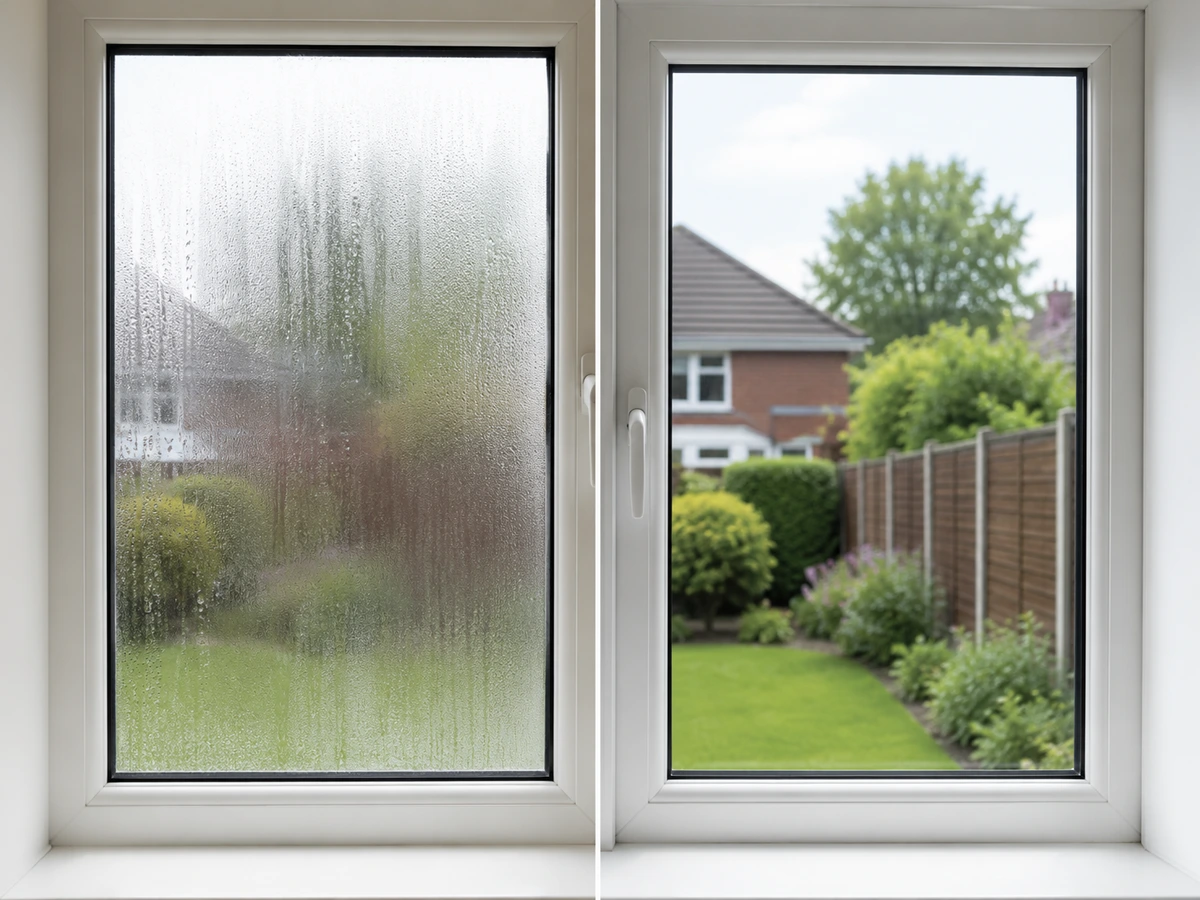
Can every misted double glazed window be repaired? Usually, no. Some misted units can be fixed by replacing the sealed glass unit, but a window that has frame damage, poor drainage, warped uPVC, or repeated seal failure may need more than a simple glass swap.
That is the honest answer most homeowners need before they spend money on the wrong fix. Misting is a symptom. The useful question is what caused it, how far the problem has gone, and whether the window around the glass is still doing its job.
At SMG Hampshire, we look at the whole window before recommending a repair. A misted pane might only need a replacement sealed unit. Or it might be the first visible sign that the frame, beads, gaskets, or installation detail has started to fail.
Why Double Glazing Mists Up In The First Place
Double glazed windows are made from two panes of glass with a sealed gap between them. That sealed gap helps with insulation, noise reduction, and comfort. When the edge seal fails, moisture gets into the cavity and turns into condensation between the panes.
Once that happens, the mist is inside the unit. Wiping the glass, improving room ventilation, or using a dehumidifier will not clear it because the moisture is trapped between the panes. This is why guidance on condensation between glass panels focuses on the failed sealed unit rather than room-side moisture.
The usual causes include age, weather exposure, failed perimeter seals, poor fitting, damaged glazing beads, blocked drainage, or movement in the frame. South coast weather can make those weak points show up faster, especially on exposed elevations where windows take more wind and rain.
A misted pane is annoying, but it is also useful. It tells you the sealed unit has stopped working properly before the problem becomes easier to ignore and harder to price.
Suggested read: Are Misted Double-Glazed Windows Getting Worse Over Time?
The Repair Depends On What Has Failed
The cheapest repair is not always the best repair. The right one depends on whether the glass unit alone has failed or whether the surrounding window is also part of the problem.
If the frame is square, secure, and draining properly, replacing the failed sealed unit is often the sensible route. That keeps the existing frame in place while removing the misted glass and restoring a clear pane.
If the frame has moved, the beads are damaged, or water is sitting where it should drain away, a new glass unit may only solve the visible mist for a while. We check those details before fitting replacement double glazed units, because a fresh unit in a failing frame can end up with the same problem later.
There is a practical judgement call here. A repair should solve the cause where possible, not just make the window look better on the day it is fitted.
When A Misted Window Can Be Repaired
A misted window can often be repaired when the sealed glass unit has failed but the frame is still sound. In that case, the existing unit can be removed and replaced with a new sealed unit made to fit the window.
This is usually the neatest option when:
- The mist is between the panes rather than on the room-side glass
- The uPVC, timber, or aluminium frame is still structurally sound
- The sash opens, closes, and locks properly
- There is no sign of water sitting in the frame
- The window has not dropped or become badly misaligned
We measure carefully, check the spacer and unit thickness, and make sure the replacement suits the frame. Small measurement errors matter with glazing. A unit that is slightly wrong can put stress on the seals, affect drainage, or sit poorly in the beads.
This is where experience saves hassle. Misted glass is visible. The details that decide whether the repair lasts are often hidden around the edge of the unit.
When Replacement Is The Better Option
Some misted windows are not worth repairing in isolation. If the frame is damaged, badly distorted, draughty, or no longer secure, replacing only the glass may be a short-term patch.
Replacement becomes more sensible when there are several failures at once. For example, a misted pane plus stiff operation, broken hinges, worn locks, cracked beads, or visible water damage points to a wider window issue. The glass is only one part of the system.
Older windows can also reach a point where repeated sealed unit failures make individual repairs poor value. If several units have misted across the same elevation, it may suggest age, exposure, or installation details are catching up with the whole set. It helps to separate small maintenance jobs from repairs that point to wider window failure before deciding whether one pane, several units, or the full window needs attention.
We do not treat replacement as the default answer. If a repair is suitable, we will say so. But if the window needs more than glass, we would rather explain that clearly than fit a unit that does not address the real problem.
Suggested read: Can Misted Double Glazed Windows Be Repaired?
The Myth Of “Defogging” Double Glazing
You may see services that promise to remove condensation from inside double glazing without replacing the sealed unit. The idea usually involves drilling, drying, and venting the glass unit.
It can make the pane look clearer for a time, but it does not restore the original sealed unit in the way a proper replacement does. Once the factory seal has failed, the unit has lost the controlled cavity that made it perform properly in the first place.
That matters if you care about warmth, energy efficiency, and long-term clarity. A clear pane is not the same as a properly sealed unit.
Suggested read: DIY Misted Window Repair Kits
For most homeowners, the better question is simple: do you want the mist hidden for now, or do you want the failed unit replaced properly? If you are weighing up unit replacement costs against a bigger window replacement, the condition of the frame still decides the best route.
What We Check Before Recommending A Repair
A good inspection is not complicated, but it should be thorough. We look at the failed unit, then check the surrounding parts that could have caused or worsened the problem.
We usually check:
- Whether the condensation is inside the sealed unit or on the glass surface
- The condition of the frame, beads, gaskets, and drainage
- Whether the sash is square and operating correctly
- Signs of movement, leaks, or repeated failures nearby
- Whether the replacement unit can be measured and fitted safely
That process helps avoid two common mistakes. The first is replacing a whole window when only the glass unit has failed. The second is replacing glass in a frame that is already causing problems. If heat loss, draughts, and wider performance are also concerns, it is worth reading practical advice on windows and doors before deciding how far to go.
If the window is part of a wider uPVC installation issue, we can also look at related uPVC windows and doors rather than treating one pane in isolation.
How To Tell If It Is Misting Or Room Condensation
Not all condensation means the unit has failed. Condensation on the room-side glass often comes from humidity inside the property. Cooking, drying clothes indoors, showering, and poor airflow can all cause surface condensation.
Misting between the panes is different. If you clean the inside and outside of the glass but the cloudy patch remains trapped in the middle, the sealed unit has likely failed.
A simple check is to look at the glass from different angles. Surface condensation will wipe away. Internal misting will stay put and often changes with temperature through the day. If you are seeing fogging alongside leaks, stiff handles, or poor locking, our guide to window and door repairs can help you spot related faults.
It is worth checking this before calling for a repair. It helps you describe the problem clearly, and it helps us decide what to inspect first.
Suggested read: What Happens If You Ignore A Misted Double Glazed Window?
FAQs
Can a misted double glazed unit be resealed?
In most cases, no. Once moisture has entered the sealed cavity, the original factory seal has failed. The usual repair is to replace the sealed glass unit, assuming the surrounding frame is still in good condition. If the issue is specifically around failed seals, our window sealing repair page explains the repair route in more detail.
Does misted double glazing mean the whole window needs replacing?
Not always. If the frame, hinges, locks, beads, and drainage are still sound, replacing the glass unit may be enough. The whole window only becomes the better option when the frame or operating parts are also failing.
Will misted glass get worse over time?
It often does. The misting may spread, the glass can become permanently cloudy, and the window may lose more of its insulating performance. The speed depends on the failed unit, exposure, and the condition of the frame.
Is it better to repair or replace old double glazing?
It depends on the number of failed units and the condition of the frames. One failed unit in a good frame is usually a repair candidate. Several failed units, draughts, poor locking, or distorted frames may make replacement better value.
A misted window does not automatically mean you need a full replacement. It does mean the sealed unit or the window system needs a proper check. The best result comes from separating the cosmetic problem from the cause.
Need Help With Misted Double Glazing?
If your double glazing has misted up, we can inspect the window and explain whether a replacement sealed unit is enough or whether the frame needs attention too.
SMG Hampshire helps with glazing, window repairs, uPVC windows, doors, and related repairs across the Hampshire area. We offer a no-obligation measuring and quotation service, including out-of-hours appointments where convenient.
To arrange a visit or ask a question, contact SMG Hampshire, call 07850 239012, or email info@smghampshire.co.uk.