
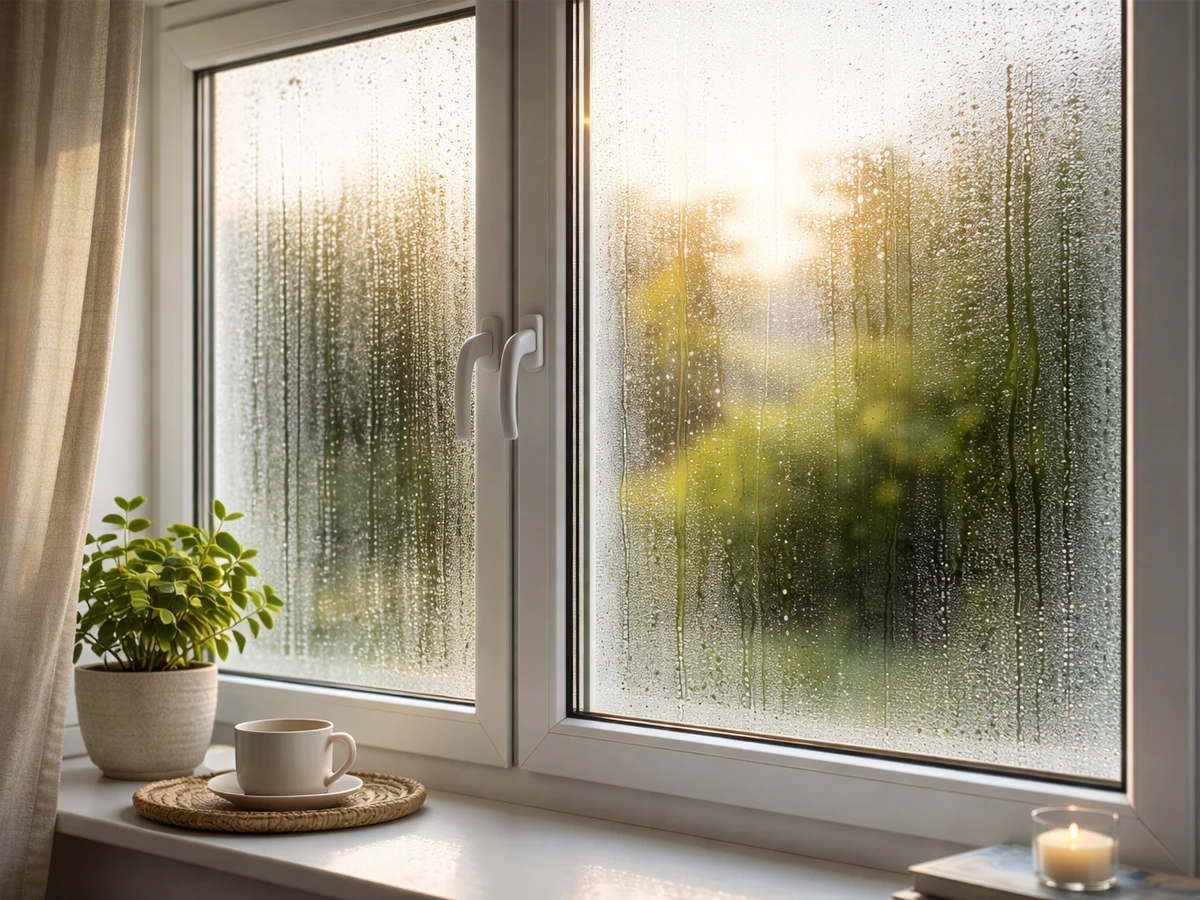
If you’ve ever woken up to mist or water droplets on your windows on a chilly morning, you’re not alone. Many homeowners see condensation on double-glazed windows, especially during colder months.
Knowing why double-glazed windows condense helps you judge if it’s normal, humidity-related, or signals glazing issues.
In this guide, we’ll explain the science behind window condensation, what causes it, when it becomes a problem, and what you can do to prevent it.
What Is Window Condensation?
Condensation occurs when warm, moisture-filled air meets a colder surface. When this happens, the water vapour in the air changes into liquid droplets on the surface.
At night and in the morning, windows are usually the coldest surfaces in the home, so condensation often forms there.
Double-glazed windows improve insulation, but can still develop condensation when the humidity inside the building (the amount of water vapour in the air) is high or when the temperature difference between inside and outside is significant.
Why Do Double-Glazed Windows Condense in The Morning
Temperature, humidity, and airflow all influence why double-glazed windows condense in the morning.
Overnight Temperature Drops
Nighttime outdoor temperature drops cool window glass, while indoor daily activities add moisture.
Warm indoor air hitting the cooler glass surface creates condensation.
Morning sunlight makes condensation visible, making it seem sudden.
High Indoor Humidity
Indoor humidity greatly affects condensation likelihood.
Everyday activities release moisture into the air, including:
- Cooking
- Showering
- Laundry drying indoors
- Breathing and sleeping
- Indoor plants
- Kettles and dishwashers
Higher indoor moisture increases the likelihood of window condensation.
Limited Overnight Ventilation
Homes are often sealed tightly overnight for warmth and security. Sealed homes retain heat but reduce airflow, allowing humidity to build; moisture then settles on colder surfaces, like windows.
External Temperature Differences
In the UK, winter temperatures can vary greatly between indoor and outdoor areas.
For example:
- Indoor temperature: 20°C
- Outdoor temperature: 3°C
This gap means the inner window surface can cool enough for condensation.
Is Condensation on Double-Glazed Windows Normal?
In most cases, a small amount of condensation on the inside of windows in the morning is completely normal.
Well-insulated, airtight homes trap humidity. While energy-efficient, this can sometimes increase condensation. However, the location of the condensation matters.
Inside Surface Condensation
Condensation on the inside pane of the glass is usually caused by indoor humidity and ventilation issues. This common type can often be managed with simple adjustments.
Outside Surface Condensation
Condensation on the outside of the window can actually be a positive sign. This means your double glazing is successfully preventing heat from escaping. Because the outer pane remains cold, moisture from the outside air can settle on the surface.
Condensation Between the Glass Panes
This is where problems can occur. If condensation forms between the panes of a double-glazed unit, it usually indicates a failed seal. When the seal fails on double-glazing, moisture can enter the space between the panes and become trapped.
This often leads to:
- Persistent misting between panes
- Reduced insulation performance
- A cloudy or foggy appearance that cannot be wiped away
In this situation, the glazing unit may need professional repair or replacement.
Common Signs of a Failed Double Glazing Unit
If you notice condensation that never clears, it may be time to investigate further.
Here are some common warning signs:
Persistent Internal Fogging
If the glass always appears misty regardless of weather conditions, it may indicate a broken seal.
Visible Water Droplets Between Panes
Moisture trapped between panes leaves visible droplets.
Reduced Window Insulation
A failed unit often results in:
- Draughts
- Cold spots near windows
- Increased heating bills
Staining or Damage Around Window Frames
Long-term condensation can damage window frames, seals, and plaster.
Suggested read: 3 Signs Your Double Glazing is Telling You Something’s Wrong
How Double Glazed Windows Prevent Condensation
Double glazing is designed to minimise condensation and heat loss through upgraded insulation.
A typical double-glazed window contains:
- Two panes of glass
- A sealed gap between them
- An insulating gas such as argon
- A spacer bar separating the panes
This design slows heat transfer, keeping the inner pane warmer than with single glazing. Even quality double glazing can’t fully eliminate condensation if indoor humidity stays high.
Simple Ways to Reduce Morning Window Condensation
If you’re noticing condensation regularly, there are several simple steps you can take to reduce it.
Improve Ventilation
Allowing fresh air to circulate helps reduce indoor moisture.
You can do this by:
- Opening windows briefly in the morning
- Using trickle vents if available
- Running extractor fans in kitchens and bathrooms
A little airflow can make a surprisingly big difference.
Control Indoor Humidity
Lowering moisture in your home helps prevent condensation.
Consider:
- Using lids when cooking
- Avoiding indoor clothes drying when possible
- Running a dehumidifier if humidity levels are high
- Wiping condensation from windows to prevent buildup
Keep Consistent Heating
Large temperature swings between night and day can increase condensation. Keeping your heating system at a consistent, moderate level overnight can help stabilise window temperatures.
Upgrade or Repair Faulty Glazing
If condensation appears between glass panes, repairing the glazing unit is often the most effective solution.
Replacing only the glass unit rather than the entire window frame can be a cost-effective way to restore insulation and clarity.
Why Professional Double Glazing Repairs Matter
When condensation becomes persistent or trapped between panes, professional repair is usually required.
Glazing specialists can:
- Diagnose seal failures
- Replace damaged double-glazed units
- Restore window insulation
- Improve overall energy efficiency
For homeowners across Hampshire, addressing glazing faults early can avert more serious problems, such as heat loss, mould growth, and structural damage around window frames.
The Role of Double Glazing in Energy Efficiency
Well-maintained double-glazed windows play an important role in improving home energy performance.
They help:
- Reduce heat loss
- Improve indoor comfort
- Lower heating costs
- Minimise draughts
- Increase property value
When glazing units fail, however, these benefits can quickly decline.
Repairing or replacing damaged units restores the performance your windows were originally designed to provide.
When to Call a Glazing Specialist
You should consider contacting a professional if you notice:
- Condensation trapped between glass panes
- Windows that appear permanently misted
- Cracked or damaged glass
- Draughts coming through the window frame
- Lowered thermal performance
Early intervention often saves money and prevents further issues.
Frequently Asked Questions
Why do my double-glazed windows condense every morning?
Morning condensation usually occurs because warm indoor air meets cooler glass surfaces overnight. This causes moisture in the air to turn into water droplets on the window.
Is condensation inside double glazing a problem?
Yes. If condensation appears between the glass panes, it typically indicates that the glazing unit’s seal has failed and moisture has entered the space.
Can condensation damage windows?
Excess condensation can cause long-term damage if left untreated. It may lead to mould growth, frame deterioration, and damage to nearby plaster or paint.
Does new double glazing completely stop condensation?
No window can eliminate condensation entirely. However, modern double glazing greatly reduces condensation by improving insulation and keeping glass surfaces warmer.
Should I replace the whole window if the unit fails?
Not necessarily. In many cases, the double-glazed unit itself can be replaced without removing the entire window frame. This is frequently more cost-effective.
Does condensation mean my home has poor ventilation?
Often, yes. High humidity and limited airflow are common causes of window condensation, especially in well-insulated homes.
Need Help With Misted or Failed Double Glazing?
If condensation is appearing between the panes of your windows or your double glazing has lost its clarity, professional assistance may be required.
At SMG Hampshire, we specialise in repairing and replacing double-glazed units across Southampton and the surrounding areas of Hampshire. With more than 30 years of glazing experience, our team provides reliable, cost-effective solutions that restore the performance and appearance of your windows.
Whether your windows are misted, cracked, or simply not performing as they should, we can help identify the problem and replace the glazing unit without a full window replacement.
For advice or a free quote, contact us today. You can call 07850 239012 or email info@smghampshire.co.uk, and a member of our team will be happy to assist with your double glazing repair or replacement needs.