
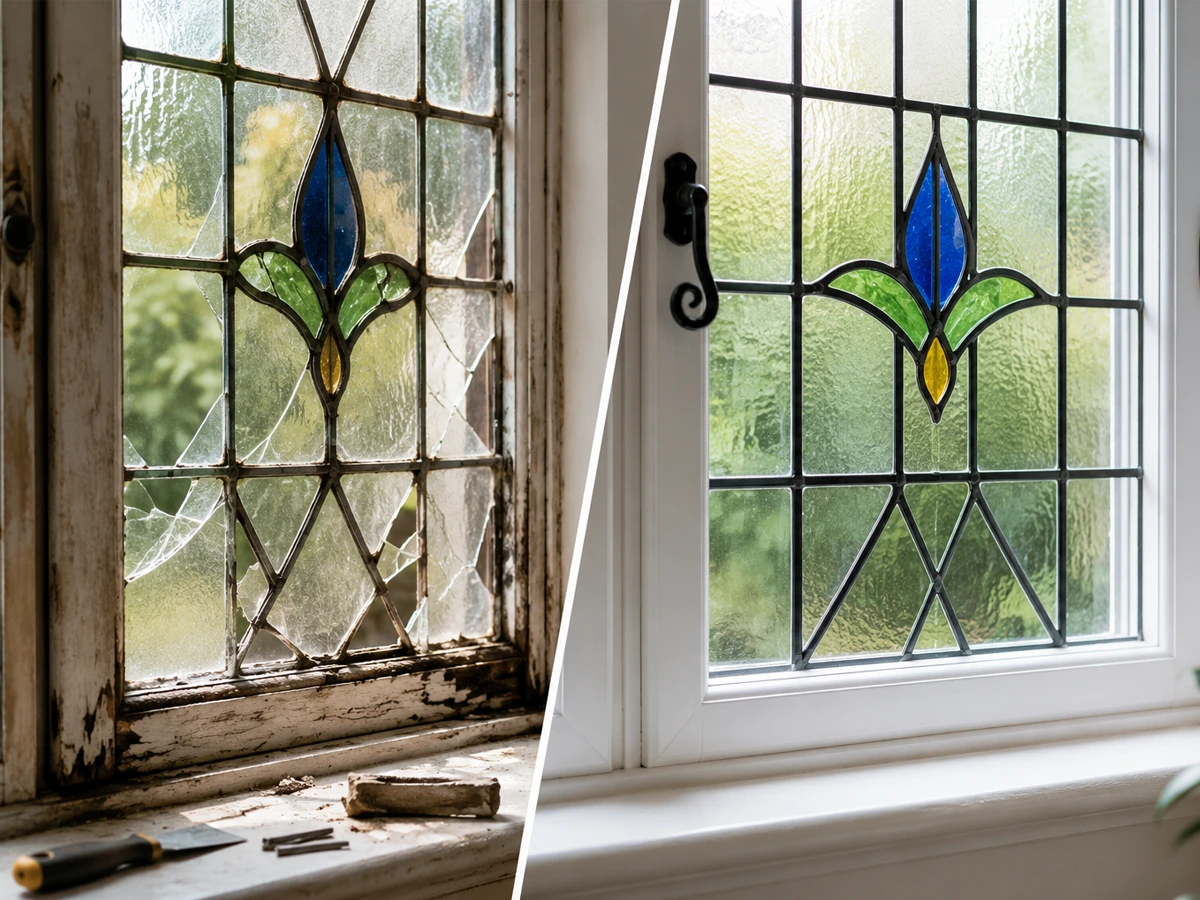
If you are weighing up leadlight window repair or replacement, the safest place to start is with the condition of the window, not the price of a new one. A cracked pane, a loose strip of lead, or a draught around the frame does not always mean the whole window needs replacing.
The tricky part is knowing when a repair is sensible and when it only delays a bigger problem. Leadlight windows can last for decades, but the materials do age. Lead cames (the lead strips that hold each piece of glass in place) can fatigue, putty can dry out, soldered joints can weaken, and panels can start to sag under their own weight.
At SMG Hampshire, we repair and replace leadlights, so the question is not “how do we sell you a new window?” It is “what does this window actually need?” This guide explains how to think through the decision before you book a professional assessment.
What Does “Leadlight” Actually Mean?
A leadlight window is made from small pieces of glass held together by lead cames. You may also hear people call them leaded windows, leaded light windows, lead windows, or leaded lights. In older homes, the glass may be clear, textured, coloured, or stained glass.
The leadwork is both decorative and structural. It gives the window its pattern, but it also holds the individual glass pieces in place. That is why leadlight window repair is different from swapping out a standard pane of glass. The glazier needs to look at the glass, the lead, the joints, the putty, any saddle bars (support bars), and the surrounding frame.
For period properties in Hampshire, especially older homes around Southampton, Winchester, Lymington, and the New Forest, leadlight windows can be part of the character of the building. Replacement leaded windows can replicate the look, but original glass and leadwork often have a softer, less uniform appearance that is hard to copy exactly.
Signs Your Leadlight Window May Need Repair
Small faults are easy to ignore because leadlight windows rarely fail all at once. They usually give you warnings first.
Look out for:
- Cracked, chipped, or missing glass
- Loose lead cames around individual panes
- Gaps in the putty around the edge of the panel
- Draughts or water coming through the window
- A panel that looks bowed, baggy, or uneven
- Rattling glass when the window moves
- Failed soldered joints where sections of lead meet
- Rusting or loose saddle bars
- Staining, damp marks, or soft timber around the frame
A single cracked pane may only need localised leadlight glass replacement if the rest of the panel is sound. Several cracks, sagging leadwork, and failed putty together point to a bigger issue.
If the glass is broken or unstable, treat it as a safety problem. Keep children and pets away from the area and arrange professional broken glass and frame repairs rather than trying to tape, bend, or remove leaded glass yourself.
When Is Repair the Better Option?
Repair is usually the right starting point when the damage is localised and the window still has its shape.
Repair may make sense when:
- One or two panes are cracked, but the leadwork is firm
- The putty has failed in small areas
- The panel is not sagging or pulling apart
- The glass has character you want to preserve
- The frame is still sound
- The issue is cosmetic, weatherproofing-related, or limited to one section
- You want to preserve original features in a period property
In this situation, a glazier may be able to replace individual glass pieces, repair loose lead sections, renew putty, strengthen weak points, or remove the panel for more careful work.
For homeowners asking “can leaded windows be repaired?”, the answer is yes in many cases, provided the structure is still healthy enough to support the repair. The important word there is “structure”. Replacing a cracked pane is straightforward compared with trying to make tired, stretched leadwork behave like new.
When Is Replacement the Better Long-Term Choice?
Replacement becomes more sensible when the whole panel has reached the end of its useful life. That does not mean the window has “failed” in a dramatic way. It may simply have aged beyond the point where small repairs make financial sense.
Replacement may be the better option when:
- Several panes are cracked or loose
- The lead cames have stretched, split, or softened
- The panel is sagging badly
- Soldered joints have failed in several places
- Water has been getting in for a long time
- The window has had repeated patch repairs
- The surrounding frame is also failing
- You need better weatherproofing, security, or thermal performance
If you keep paying for small lead window repairs on a panel that is already losing its structure, the work can become a false economy. One modest repair is sensible. Several repeat visits to prop up a failing panel can cost more over time than replacing or restoring it properly.
This does not mean replacement has to strip the home of its character. New or restored leaded lights can be made to suit the property, and in some cases, original panels can be restored rather than discarded.
Leadlight Window Repair or Replacement: A Simple Decision Checklist
Use this as a first-pass guide, not a substitute for a glazing survey.
| If You See This | Repair Is More Likely | Replacement Or Full Restoration Is More Likely |
|---|---|---|
| One cracked pane | Yes, if the lead is sound | Only if the panel is also weak |
| Several cracked panes | Maybe | More likely |
| Small putty gaps | Yes | If water damage is widespread |
| Draughts | Maybe, depending on the cause | If the panel or frame has distorted |
| Sagging or bowing | Minor sagging may be repairable | Significant sagging usually needs more than a patch |
| Loose leadwork | Sometimes | If the cames are fatigued throughout |
| Failed soldered joints | Local repairs may work | Multiple failures suggest wider deterioration |
| Period or original glass | Repair or restoration is worth exploring | Replacement should be considered carefully |
| Listed building or conservation area | Repair may be expected | Check consent before replacing |
If your window sits somewhere between “repairable” and “too far gone”, that is exactly what a free assessment is for. Give us a call and our glaziers will tell you honestly which option makes the most sense for your situation.
How Much Does Leaded Window Repair Cost?
A precise leaded window repair cost depends on the size of the window, access, the condition of the leadwork, whether matching glass is needed, and whether the panel has to be removed for bench work. Without inspecting the window, any exact figure would be guesswork.
For reference:
- Minor repairs are normally the lowest-cost route when damage is limited
- Replacing one cracked or missing piece of glass usually costs less than replacing a full panel
- Re-puttying small sections is more modest than rebuilding tired leadwork
- Full leadlight glass replacement or re-leading is a larger investment because it involves more labour, handling, and materials
- Replacement becomes better value when the existing panel is failing in several places
The same repair versus replacement logic applies to misted double glazing. A failed sealed unit might not mean the whole frame needs replacing, but repeated small fixes stop making sense once the underlying unit or structure has failed.
The better approach is to choose the option that helps you avoid paying twice, especially for leaded lights, because small faults can spread easily if movement, moisture, and fatigue are ignored.
Can Leaded Windows Be Double Glazed?
Yes, leaded windows can sometimes be incorporated into double glazing. One option is to repair or restore the original leadlight panel and encapsulate it inside a sealed double-glazed unit. This means the original look is retained, while the sealed unit helps with thermal efficiency and draught-proofing.
This is not the right answer for every window. The panel needs to be suitable for the process, and the frame must be able to accept the finished unit. However, it can be a useful third option when you do not want to lose the appearance of original leadlight windows, yet you also want better comfort than single glazing provides.
Think of it as a middle route:
- Standard repair keeps the existing window working
- Replacement gives you a new panel or unit
- Encapsulation can preserve the leaded look while improving performance
For homeowners comparing encapsulated leaded double-glazed units, secondary glazing, and leadlight double glazing replacement, the right route depends on the property, the existing frame, and how important the original glass is to you.
Why Professional Leadlight Work Matters
Leadlight work is not a good DIY project once the structure is involved. Cleaning, checking for obvious cracks, and keeping the area safe are one thing. Rebuilding leadwork, replacing glass within cames, soldering joints, and assessing panel strength are different jobs.
The main risk with DIY is that a small problem becomes a bigger one. Lead cames can bend out of shape. Old glass can crack while being handled. A panel that looks secure can loosen once pressure is applied. Putty glazing, including traditional linseed putty, also needs proper preparation and finishing if it is going to keep out moisture.
SMG Hampshire carries out traditional leadlight and putty work across Hampshire, from single cracked panels to fuller repair and replacement work for original leaded lights. With over 30 years of glazing experience, we can assess whether the issue sits with the glass, leadwork, putty, frame, or the whole panel.
If you are tempted to try a structural repair yourself, keep the risk in perspective. Damaged leaded glass can be sharp, unstable, and awkward to support safely.
What About Listed Buildings and Conservation Areas?
If your property is listed, or if it sits in a conservation area, do not assume you can replace leaded lights without checking first. Work that affects the character of a listed building can need listed building consent rules to be followed before it starts.
In some cases, repair may be preferred because it preserves original material. In others, like-for-like replacement may be acceptable. The safest route is to check with your local planning authority before ordering replacement leaded windows or changing the appearance of the glazing.
This matters for older Hampshire homes where leaded lights are part of the frontage. Even if consent is not required, preserving original details can help keep the property’s character intact.
Do Leaded Windows Add Value to a House?
Original leaded windows can add appeal because they make an older property feel more authentic. Buyers who like period homes often notice details such as coloured glass, textured panes, original timber, and well-kept leaded lights.
That does not mean every damaged leadlight must be preserved at any cost. A badly sagging, draughty, unsafe panel can undermine the very character you are trying to protect. The better question is whether the original feature can be made sound.
When deciding whether to repair leaded windows in a period property, start with three checks: is the glass worth keeping, is the leadwork structurally sound, and will repair provide enough weatherproofing for how the room is used? If the answer is yes, repair or restoration is worth exploring. If not, replacement may protect the home better.
Frequently Asked Questions
Is it cheaper to repair or replace a leadlight window?
Repair is normally cheaper when damage is localised, such as one cracked pane or a small section of failed putty. Replacement is better when the leadwork, joints, glass, and structure have deteriorated across the whole panel. Repeated patch repairs on a failing window are often the expensive route in the long run.
Can a cracked leaded glass panel be repaired?
Yes, a cracked leaded glass panel can often be repaired if the lead cames and surrounding structure are still sound. A glazier may be able to replace the cracked piece within the existing leadwork. If the whole panel is loose, bowed, or fatigued, the repair may need to be more involved.
How long do leaded windows last?
Leaded windows can last for decades, and some survive for many generations with careful maintenance. The lead cames often become the limiting factor because lead softens and fatigues over time. Once a panel starts to sag or pull apart, it may need re-leading, restoration, or replacement rather than another small patch.
Can leaded windows be double glazed?
Yes, leaded windows can sometimes be restored and encapsulated inside a sealed double-glazed unit. This keeps their traditional leaded appearance while improving comfort, draught control, and thermal performance. A glazier needs to assess whether the original panel and frame are suitable.
Do I need permission to replace leaded windows on a listed building?
You may need consent if the property is listed or if the window contributes to the character of a conservation area, so check with your local planning authority before replacing original leaded lights. Repair may be the safer first option where heritage character matters.
Need Help Deciding Whether to Repair or Replace?
If your leadlight window is cracked, draughty, sagging, or letting water in, it is worth getting it assessed before the damage spreads. A proper look costs nothing, and it can save you from paying for the wrong fix.
SMG Hampshire repairs and replaces leadlights across Hampshire, including Southampton, Totton, Lymington, and nearby areas. We will inspect the window, explain whether repair, restoration, replacement, or encapsulation makes sense, and provide a free, no-obligation quote.
To arrange a visit or ask a question, contact SMG Hampshire, call 07850 239012, or email info@smghampshire.co.uk.