
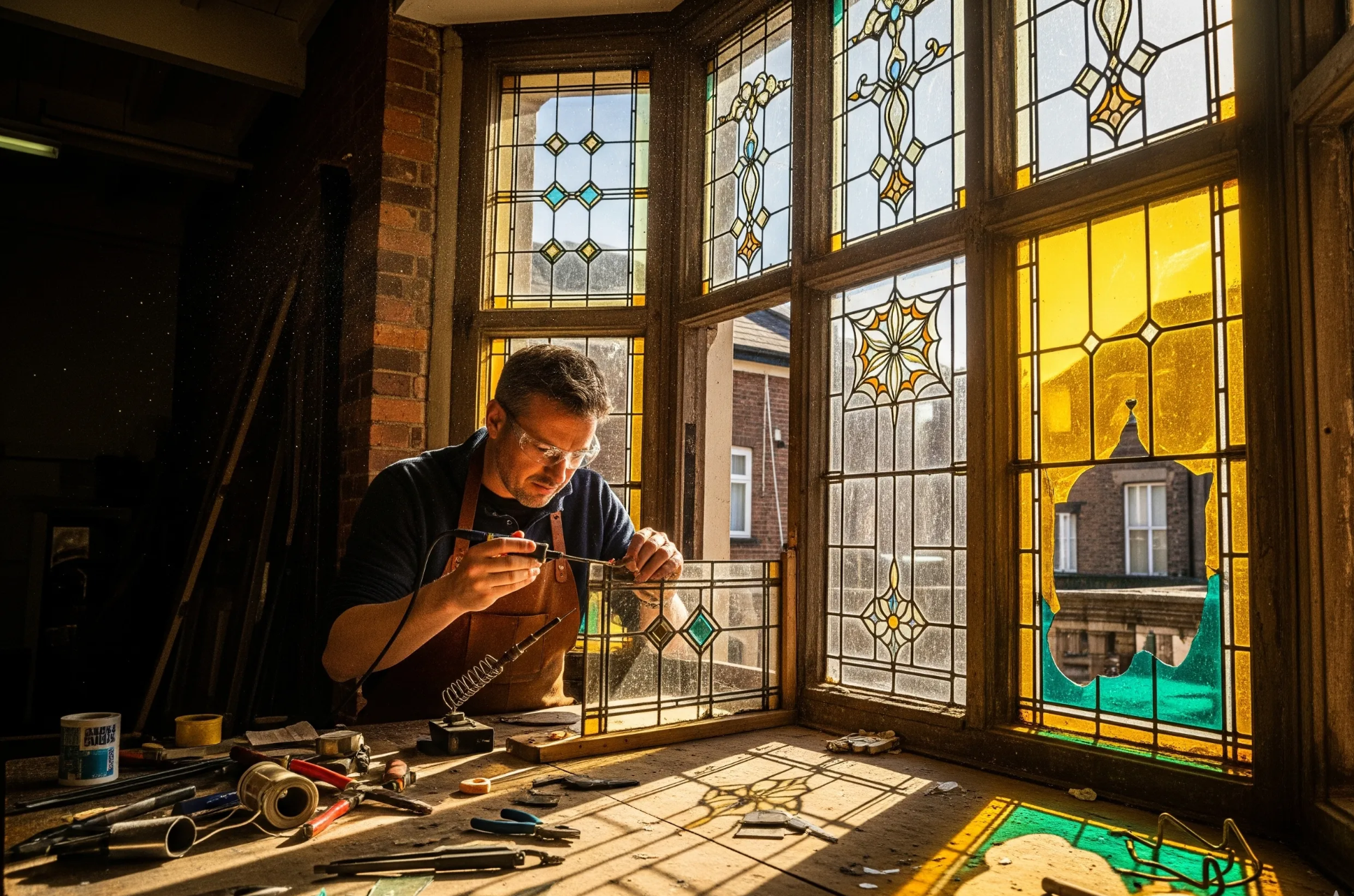
When you stand before an old building, a parish church, a Georgian townhouse, or a Victorian school, it is often the windows that speak first. They do not merely admit light; they carry centuries of craft. The softly rippled glass, the geometry of lead lines, and the gentle ageing of putty all shape the character of heritage buildings across Hampshire and the South of England.
Two elements sit at the heart of this character: leaded lights and traditional linseed-oil putty glazing. They are easy to overlook, yet without them, historic windows would not endure. Careful restoration is not simply about stopping draughts or tightening frames; it is about preserving architectural identity and ensuring period properties retain their authenticity for future generations.
That is why specialist heritage glaziers such as SMG Hampshire dedicate their work to conserving original windows with traditional materials and conservation-led methods.
Why Leaded Light Windows Are Worth Preserving
Modern windows are efficient and uniform. Heritage windows are individual. Each pane was cut by hand, each lead came shaped and assembled by a craftsman. Slight imperfections in the glass create the shifting light that defines period interiors.
Leaded lights, small glass panes joined by lead cames, are among the most recognisable features of historic glazing. Across Hampshire’s older homes and churches, they range from simple lattice patterns to decorative motifs unique to a property.
Traditional putty glazing is equally important. Linseed oil putty secures the glass while allowing timber frames to move naturally with seasonal changes in moisture and temperature. Unlike modern sealants, it flexes with the building rather than trapping moisture, a key reason original windows can survive for centuries when properly maintained.
Preserving both leaded lights and putty work maintains the visual integrity, craftsmanship and value of heritage buildings.
Common Problems in Heritage Windows (and Why Early Repair Matters)
Time and weather inevitably affect historic glazing. The most frequent issues we see in Hampshire properties include:
- Cracked or missing putty allowing draughts and water ingress
- Bowed or fatigued lead cables weaken the panel.
- Loose or cracked glass panes
- Timber decay around glazing rebates
- Panel movement is causing rattling or distortion.
None of these faults usually requires full window replacement. However, delays allow moisture to spread into timber frames and surrounding masonry, increasing repair costs and risking the loss of original fabric.
Early specialist repair preserves more of the original window and avoids unnecessary replacement.
How Traditional Leaded Light and Putty Restoration Works
Heritage window restoration is a conservation process rather than a standard repair. The aim is always to retain as much original material as possible.
Careful Survey and Documentation
Each window is assessed to determine structural stability, glass condition, and lead fatigue. Original layouts and glass are recorded, so authenticity is maintained.
Gentle Dismantling of Leaded Panels
Where necessary, panels are removed and labelled. Sound lead may be retained; fatigued sections are replaced with matching profiles.
Glass Conservation or Heritage Replacement
Original panes are preserved wherever possible. When replacement is unavoidable, period-appropriate restoration glass is selected to match tone and distortion.
Traditional Putty Re-Glazing
Hand-applied linseed-oil putty secures the glass and seals against weather. This breathable system protects timber and allows natural movement.
Frame Repair and Reinstallation
Timber repairs, consolidation, or treatment are carried out before reinstating the restored panels.
The result is not a “new” window but the same historic window, structurally sound and visually authentic for decades to come.
Can Heritage Windows Be Made More Energy Efficient?
Yes, without harming character.
Owners of period homes in Hampshire often worry about heat loss. Conservation-friendly upgrades include:
- Discreet secondary glazing (internally fitted)
- Draught-proofing of opening lights
- Timber repairs to improve sealing
- Stabilisation of leaded panels
These measures significantly improve comfort while retaining the original glazing, which is often preferred in listed buildings and conservation areas.
Why Specialist Heritage Glaziers Are Essential
Leaded light restoration is a skilled craft requiring traditional materials and conservation knowledge. Inappropriate repairs, such as modern silicone sealants or float-glass replacement can accelerate decay and reduce historic value.
Experienced heritage glaziers understand:
- Traditional lead came profiles and soldering
- Historic glass types and sourcing
- Breathable glazing systems
- Conservation area and listed building requirements
- Timber–glass interaction over time
Professional restoration protects both the window and the building’s heritage status.
Heritage Window Restoration Across Hampshire and Surrounding Areas
SMG Hampshire works with homeowners, churches and historic property custodians across:
- Southampton
- Totton
- New Forest villages
- Winchester
- Romsey
- Eastleigh
- Lyndhurst and surrounding conservation areas
Many properties in these locations feature original leaded-light casements or stained panels dating from the 18th to the early 20th centuries, making specialist restoration particularly important.
FAQs: Leaded Light and Putty Window Restoration in Hampshire
Do you repair leaded light windows in listed buildings in Hampshire?
Yes. We regularly restore windows in listed properties and conservation areas across Hampshire, using traditional materials that comply with heritage regulations.
Can you match original glass in period homes around Southampton and the New Forest?
Yes. We source restoration glass that closely matches historic handmade panes commonly found in local Georgian and Victorian properties.
How long does putty glazing last in Hampshire’s coastal climate?
Properly applied linseed-oil putty typically lasts 20–40 years. Coastal exposure may slightly shorten lifespan, but regular maintenance extends durability.
Is it better to repair or replace leaded windows in older Hampshire cottages?
Repair is usually preferred. Retaining original leaded lights preserves character and often meets conservation requirements, whereas replacement can diminish heritage value.
Do you offer leaded light repairs in Totton and nearby villages?
Yes. We carry out on-site repairs and workshop restoration for properties throughout Totton, the New Forest and the surrounding Hampshire areas.
Will restoring my leaded windows reduce draughts in older homes?
Yes. Re-puttying, panel stabilisation and draught-proofing significantly reduce air leakage while maintaining the original window.
Preserve the Character of Your Heritage Windows
Historic windows are more than building components; they are crafted artefacts that shape how period architecture is experienced. Repairing rather than replacing preserves authenticity, protects property value, and keeps traditional craftsmanship alive.
At SMG Hampshire, we specialise in conservation-led restoration of leaded lights and traditional putty glazing across Hampshire and the South. Every project is approached with respect for original materials, historic accuracy and long-term durability.
Speak to a Hampshire Heritage Window Specialist
If your property has ageing leaded lights, cracked putty or loose panes, early restoration can prevent costly deterioration and preserve original character.
SMG Hampshire specialises in conservation-led restoration of leaded lights and traditional putty glazing across Hampshire and the surrounding areas. Whether you own a listed building, a period cottage or a historic town property, we are happy to provide advice, condition assessments or restoration quotations.
To discuss your windows, please get in touch with SMG Hampshire on 07850 239012 or email info@smghampshire.co.uk. We welcome enquiries from homeowners, churches and custodians of historic properties throughout Hampshire and the New Forest.
Preserve the glass. Protect the craft. Keep your heritage windows alive.