
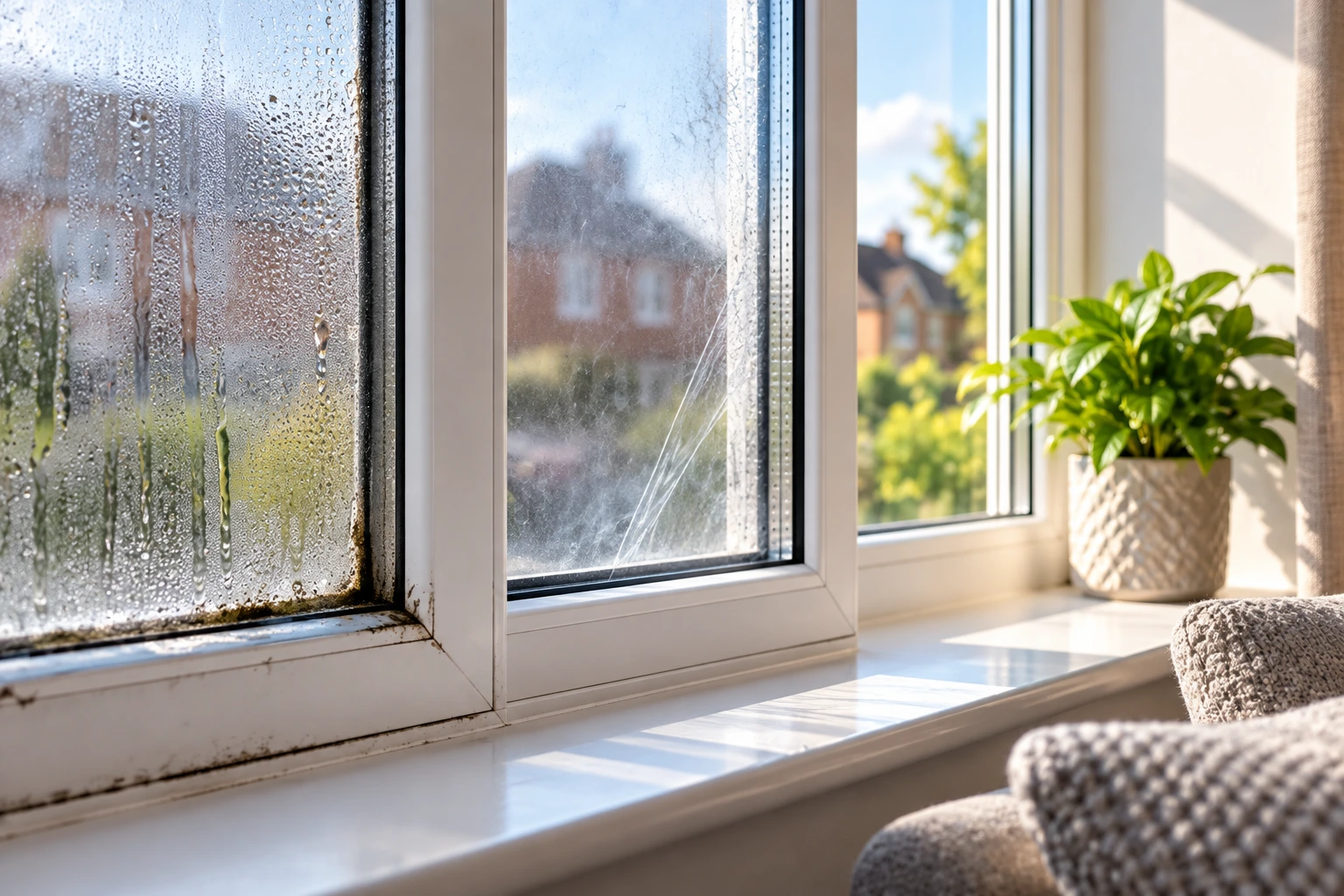
Problems with double glazing often show themselves through misting between the panes, draughts, stiff operation or a room that feels colder and noisier than it once did. The key is to identify which part of the window has failed: a repairable component, the sealed glass unit or the frame itself.
SMG Hampshire has over 30 years of glazing experience and works with both domestic and commercial customers. Its repair and replacement services cover broken windows, double-glazed uPVC windows and sealed units. Recognising the warning signs early can help protect comfort, security and energy efficiency while avoiding work the window does not need.
Quick Answer: Does Your Double Glazing Need Repairing or Replacing?
The right solution depends on which part of the window has failed:
- Repair may be suitable when the problem involves hinges, handles, locks, alignment, draughty gaskets or another replaceable component.
- A replacement double-glazed unit may be needed when moisture is trapped between the panes, the glass is cracked or the sealed unit has failed. The existing frame can often remain in place if it is sound.
- A complete window replacement may be more sensible when the frame is badly damaged, distorted or repeatedly causing problems, or when several parts of an old window are failing together.
A professional inspection can pinpoint whether the fault sits with the glass, sealed unit, gasket, lock, hinge, frame or surrounding installation. Similar symptoms can have different causes, so a complete window replacement should not be the automatic first step.
How Double Glazing Works — And What Can Go Wrong
A double-glazed unit contains two panes of glass separated by a sealed space. This construction helps reduce heat loss and external noise. The glass unit is fitted within a frame, together with components such as seals, gaskets, hinges, handles, locks and drainage channels.
Not every double-glazing problem starts in the glass. The sealed unit may fail while the frame remains sound; equally, the glass may be fine while a worn hinge or poor alignment stops the sash closing tightly. Finding the faulty part makes it easier to choose the right repair without replacing more than necessary.
Seven Signs Your Double Glazing Needs Attention
1. Condensation or mist between the panes
Moisture trapped inside the sealed cavity is one of the clearest signs of double glazing failure. It may appear as a light haze, persistent misting or visible droplets that cannot be wiped away from either side.
This is different from condensation on the room-facing surface of the glass. Surface condensation can be linked to indoor humidity and ventilation. Condensation between the panes usually indicates that the perimeter seal has failed and moisture has entered the unit.
Once the sealed cavity has been compromised, wiping the glass or improving ventilation will not clear the moisture inside it. In many cases, the practical solution is to replace the sealed glass unit rather than the whole window frame. Learn more about condensation in double glazing, including how to distinguish surface moisture from a failed sealed unit.
2. Draughts around a closed window
A noticeable draught suggests that the window is no longer sealing correctly. Possible causes include worn gaskets, loose or damaged hinges, poor alignment, gaps around the frame or deterioration in the surrounding sealant.
Draughts do not always mean the entire window needs replacing. If the frame and glass remain in good condition, adjusting the sash or replacing a failed component may restore a tight seal. However, a distorted or badly degraded frame may require a more substantial solution.
3. Rooms feel colder near the glass
It is normal for the area immediately beside a window to feel somewhat cooler than the centre of a room. A clear change in comfort, persistent cold spots or a window that feels significantly colder than similar units may point to a problem.
The cause could be a failed sealed unit, poor contact between the sash and frame, deteriorated seals or gaps around the installation. Because several faults can produce the same symptom, cold glass alone is not enough to diagnose the problem. Look for supporting signs such as misting, draughts or visible damage.
4. More outside noise is getting in
If traffic, voices or other outside sounds have become more noticeable, check whether the window closes firmly and evenly. Failed seals, damaged glass, worn hinges or gaps around the sash can reduce its ability to limit sound.
Noise can also travel through walls, vents and other openings, so it should be considered alongside the window’s physical condition. A glazing specialist can check whether the window itself is responsible.
5. The window sticks, drops or will not close properly
A window that is difficult to open, catches on the frame or needs force to close may have worn hinges, a faulty locking mechanism or alignment problems. These are often hardware issues rather than failures of the glass.
Do not continue forcing the handle. Doing so can place extra strain on the mechanism and turn a straightforward adjustment or component repair into a larger fault. A window that cannot be secured should be assessed promptly.
6. Cracks, chips or impact damage appear in the glass
Cracked glass should not be ignored. Damage can weaken the pane and may affect the security and weather resistance of the window. Even a small crack can spread following changes in temperature, vibration or further impact.
The correct response depends on the type, position and extent of the damage. Where the frame is sound, replacing the sealed unit may be sufficient. Broken or unstable glass should be kept clear and handled by a professional.
7. The frame or surrounding area shows damage
Look for distortion, movement, persistent gaps, damaged joints, discolouration, decay in timber frames or water staining around the reveal. These signs may indicate that the issue extends beyond the sealed unit.
Water marks do not always prove that the window is leaking; condensation, building defects and failed perimeter sealant can produce similar symptoms. The source should be identified before remedial work begins.
Repair, Replace the Glass Unit or Replace the Whole Window?
The word “replacement” can be misleading because it may refer either to replacing the sealed glass unit or installing a completely new window. These are different jobs with different costs and levels of disruption.
When a repair may be enough
Repair is often the first option when the main structure of the window remains sound. Depending on the diagnosis, work may involve:
- Adjusting a dropped or misaligned sash
- Replacing worn hinges
- Repairing or replacing handles and locking components
- Renewing suitable gaskets or seals
- Addressing localised gaps around the installation
- Clearing drainage paths where appropriate
The aim is to correct the faulty component rather than replace parts that are still performing properly.
When the sealed glass unit should be replaced
A replacement double-glazed unit is commonly considered when:
- Condensation or water is trapped between the panes
- A pane is cracked or broken
- The sealed unit has failed but the frame is still stable and serviceable
- The glass specification needs changing while the existing frame remains suitable
The old unit can be removed from the frame and a new sealed unit fitted in its place. This can restore clear glass and the function of the sealed cavity without replacing the surrounding frame. If you are considering doing the work yourself, read about replacing a blown double-glazed unit before deciding.
When a complete window replacement may be better
Replacing the full window may be appropriate where:
- The frame is badly distorted, damaged or deteriorated
- The sash and frame no longer fit together securely
- Several major components are failing at the same time
- Repairs have become frequent without providing a lasting solution
- Water ingress has caused wider damage that cannot be resolved by replacing the glass alone
- The existing window is unsuitable for the property’s current requirements
Age can inform the decision, but it should not be the only factor. An older, well-maintained frame may still be repairable, while a newer window can require replacement if it has suffered serious damage or was poorly installed.
How to Decide What Your Window Needs
Before deciding, look at the whole window rather than relying on a single symptom.
Check where the condensation is
Wipe both accessible surfaces of the glass. If the mist remains inside the cavity, the sealed unit is likely to have failed. If moisture is on the room-facing surface, first consider humidity, heating and ventilation; current consumer condensation guidance can help distinguish surface moisture from a fault between the panes.
Test how the window operates
Open and close it gently. Check whether it catches, drops, rattles or needs excessive force. Make sure the handle moves normally and the sash closes evenly against the frame. Avoid dismantling locking or glazing components yourself.
Inspect the frame and surrounding seals
Look for gaps, movement, cracking, distortion or signs of persistent moisture. Check whether the issue affects one section, one window or several windows across the property. A localised fault is more likely to need a targeted repair than a widespread pattern of deterioration.
Consider the history of the problem
A recent isolated fault is different from repeated breakdowns. Note when the symptom began, whether it changes with the weather and which repairs have already been attempted. This information can help a glazier diagnose the cause efficiently.
Compare like-for-like recommendations
If you request quotations, make sure each one addresses the same scope. One may cover a hardware repair, another a sealed-unit replacement and another a complete new window. The lowest figure is not necessarily the best value if it does not correct the underlying fault.
Common Mistakes to Avoid
Assuming every misted window needs a full replacement
Misting between the panes generally indicates a failed sealed unit, but the frame may still be usable. Ask whether the glass unit can be replaced independently before committing to a new window.
Treating internal condensation as sealed-unit failure
Moisture on the inside surface of the glass is not the same as moisture between the panes. Improving extraction, ventilation and consistent heating may help with surface condensation, although persistent damp should be investigated properly.
Forcing stiff handles or windows
A stiff mechanism is a warning sign. Repeated force can damage handles, locks and hinges and may leave the window insecure.
Relying on a cosmetic fix for moisture between panes
A treatment that temporarily removes visible moisture does not necessarily restore the original sealed cavity. Ask whether the failed seal is being addressed or whether the treatment only improves the appearance temporarily. Before buying one, consider the limitations of DIY misted-window repair kits.
Delaying cracked-glass or security repairs
A window that will not lock or contains damaged glass should be prioritised. Keep people and pets away from unstable glass and arrange professional assistance.
What a Professional Assessment Should Cover
A useful assessment should identify the failed component and explain the least disruptive appropriate solution. The glazier may examine:
- The position of condensation or water
- The condition of the glass and spacer around the unit
- How the sash sits within the frame
- Hinges, handles and locking points
- Gaskets and perimeter seals
- Frame condition and drainage
- Signs of movement, impact or previous repairs
Ask whether the quotation covers a component repair, a replacement sealed unit or a complete window. SMG Hampshire offers free quotes and estimates for glazing work. Before approving the job, confirm the affected component, glass specification, finish, timescale and any written guarantee terms that apply.
Frequently Asked Questions
How can I tell if condensation is inside the double glazing?
Try wiping the internal and external surfaces. If the haze or droplets remain and appear to sit between the panes, the sealed unit has probably lost its seal. Condensation on the room-facing surface is more commonly associated with indoor moisture.
Why does my double-glazed window feel cold but look undamaged?
Possible causes include a draught around the sash, worn seals, poor alignment or a problem with the sealed unit. Some temperature difference near glass is normal, so the window should be checked for other symptoms before deciding on repairs.
Is it worth repairing old double glazing?
It can be, especially when the fault is limited to hardware or one sealed unit and the frame remains sound. Replacement may offer better value when problems are recurring, the frame is damaged or several major parts have deteriorated.
Can a cracked pane in a double-glazed window be replaced on its own?
Double glazing is manufactured as a sealed unit, so a cracked pane will normally mean replacing that unit rather than fitting one loose pane into the existing cavity. The surrounding frame may not need replacing if it remains serviceable.
Will new seals fix condensation between the panes?
Replacing accessible gaskets may help with draughts, but it will not normally restore a sealed unit that already contains moisture. Condensation between the panes usually calls for replacement of the affected glass unit.
Should all the windows be replaced if only one has failed?
Not necessarily. If the issue is isolated and the remaining windows are in good condition, a targeted repair or unit replacement may be sufficient. A broader replacement plan may be considered if failures are widespread or the windows no longer meet the property’s needs.
Get the Right Solution for Faulty Double Glazing
The right solution depends on which part of the window has failed. Misting between the panes often points to the sealed unit, while stiffness or poor closing may indicate worn hardware or alignment problems. Serious frame damage can make a complete replacement more appropriate.
If your double glazing is misted, draughty, damaged or difficult to operate, SMG Hampshire can check whether the glass, sealed unit, hardware or frame needs attention. The team serves domestic and commercial customers across Hampshire, including those looking for double glazing repairs in Southampton, Winchester, Lymington and Totton and Eling. To arrange an assessment or request a free quote, call 07850 239012, email info@smghampshire.co.uk, send a WhatsApp message or use the online contact form. An out-of-hours, no-obligation measuring and quotation service is also available.