
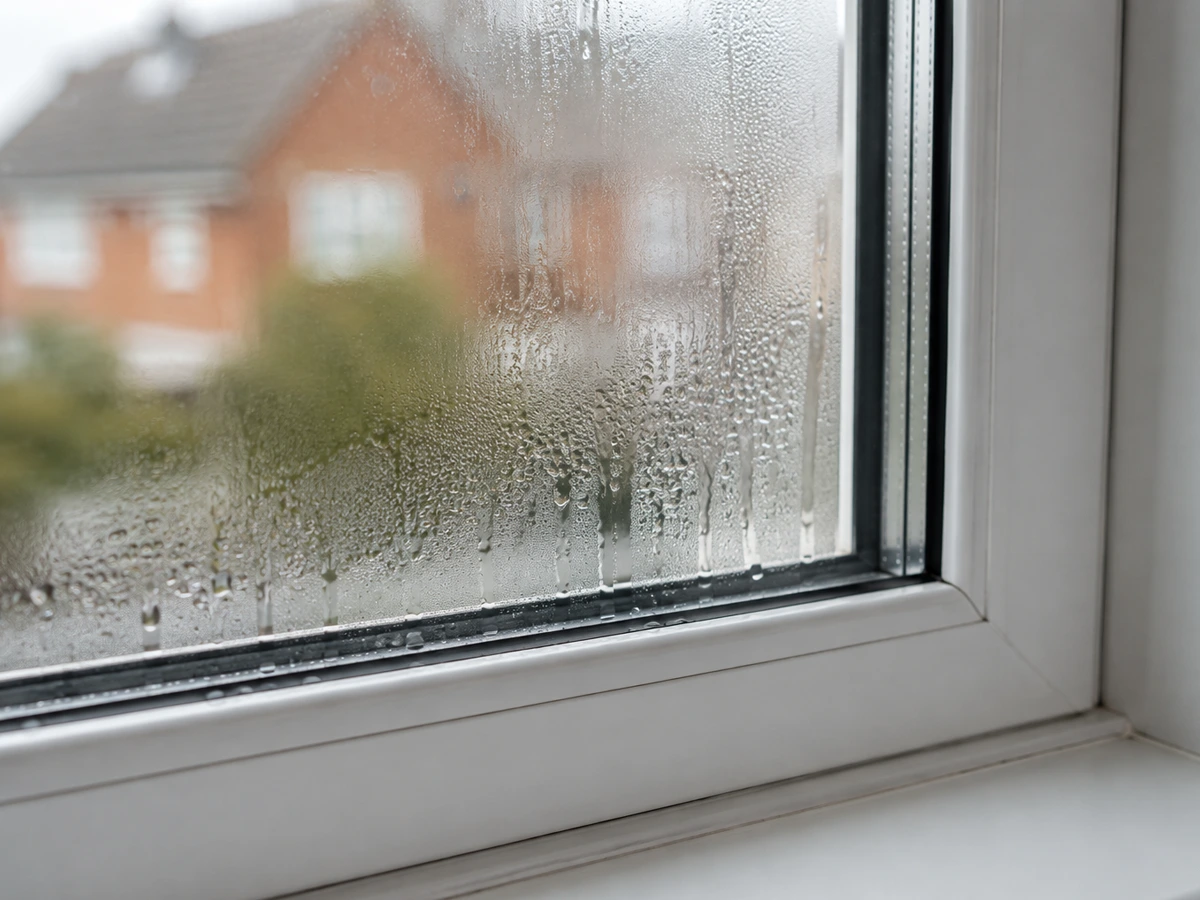
Condensation in double-glazed windows can be harmless, annoying, or a sign that the sealed glass unit has failed. The important detail is where the moisture appears: outside the glass, on the room-facing pane, or trapped between the panes.
Double glazing is now standard in many UK homes because it helps hold heat in, cuts down outside noise, and makes rooms feel more comfortable. So it is frustrating when a clear window starts looking cloudy, wet, streaked, or fogged up.
Not every misted window needs replacing. Condensation on the outside can be normal. Condensation on the inside often points to humidity and ventilation. Water inside a double-glazed window, between the two panes of glass, usually means the sealed unit has failed and needs professional attention.
At SMG Hampshire, we repair and replace failed double-glazed units across Hampshire, including misted units, foggy glass, damaged seals, and window panes that have lost clarity.
First, Check Where the Condensation Is
Before deciding what to do, look closely at where the moisture is sitting. There are three main possibilities:
- On the outside of the outer pane
- On the inside of the room-facing pane
- Between the two panes of glass
This quick check matters because each one has a different cause. Wiping the glass with a cloth is often enough to tell the difference. If the condensation wipes away from inside the room, it is surface moisture. If it sits on the outside, it should clear naturally. If it looks trapped inside the glass unit and will not wipe off from either side, the sealed unit has probably failed.
Condensation on the Outside Usually Means the Window Is Working
Condensation on the outside of double-glazed windows often appears first thing in the morning, especially after a cool, clear night. It can look worrying, but it is usually a sign that the window is insulating well.
This happens because the outer pane stays cold while the warm air inside your home is being held indoors. Moisture in the outside air then settles on the cold external glass, much like dew on a car windscreen.
In most cases, outside condensation clears as the day warms up. It does not mean the window is broken, and it does not need a repair unless there are other signs of damage.
Suggested read: Why Do Double-Glazed Windows Condense in the Morning?
Condensation on the Inside Points to Moisture in the Home
Condensation on the inside of double glazing forms on the room-facing side of the glass. This is common in kitchens, bathrooms, bedrooms, and rooms where washing is dried indoors.
Everyday activity adds moisture to the air. Cooking, showering, breathing, drying clothes, and even closing the door on a warm room can raise humidity. When that warm, damp air meets a colder pane of glass, water droplets form.
The window may be doing its job, but the room needs better airflow. The practical starting point is reducing moisture build-up and improving ventilation so damp air has a way to escape.
Practical ways to reduce inside condensation include:
- Opening windows for short periods each day
- Using extractor fans while cooking or showering
- Leaving bathroom and kitchen fans running for a little longer
- Keeping trickle vents open where fitted
- Avoiding drying clothes indoors where possible
- Using saucepan lids to reduce steam
- Moving furniture slightly away from cold external walls
- Using a dehumidifier if humidity is a regular issue
Inside condensation is still worth managing. If it is left for long periods, it can encourage mould around seals, frames, plaster, and window reveals.
Suggested read: How to Fix Condensation in Double Glazing
Water Inside a Double-Glazed Window Is Different
Water inside a double-glazed window means moisture has entered the sealed cavity between the two panes. This is the issue people often describe as misted double glazing, foggy double glazing, steamed up double glazing, or a blown window.
A sealed unit is designed to keep the gap between the panes dry. That gap helps the window insulate properly. When the edge seal fails, moisture can enter the cavity and leave mist, droplets, streaks, or mineral marks that cannot be cleaned away.
Common signs include:
- Mist or fog that stays between the panes
- Water droplets inside the glass unit
- Cloudy marks that do not wipe off
- Streaks or tide marks inside the window
- A window that looks dirty even after cleaning
- Condensation that returns soon after the sun or temperature changes
This is not a cleaning problem. It is a failed sealed unit problem. If the pane has blown and you are based locally, our blown window repair service can help confirm whether the glass unit can be replaced without changing the whole frame, including for homeowners looking for misted window repair in Southampton or nearby areas.
Suggested read: Why Do Double-Glazed Windows Fog Up Inside?
Can You Remove Condensation Between Double Glazing?
You cannot properly remove condensation between double glazing with a cloth, hairdryer, heater, or DIY cleaning method. The moisture is inside the sealed unit, not on the surface of the glass.
Some services drill small holes into the unit to release moisture or improve appearance for a while. That may make the glass look clearer temporarily, but it does not restore the original seal or bring back the window’s insulating performance.
In most cases, the sensible fix is to replace the sealed glass unit. The surrounding frame can often stay in place, which means the repair is usually more straightforward than replacing the whole window. SMG Hampshire provides replacement double-glazed units for misted, blown, or broken glass where the frame can remain in place.
SMG Hampshire can inspect the affected window and advise whether a replacement sealed unit is the right option. If the frame is still sound, we can usually replace the failed glass unit without disturbing the rest of the window.
Suggested read: Can a Misted Double-Glazed Window Be Repaired?
What Causes Double Glazing to Mist Up Inside?
Double glazing mists up inside when the sealed unit loses its airtight seal. Once that seal breaks down, moisture can get into the cavity and condense between the panes.
Common causes include:
- Age-related seal failure
- Poor installation
- Movement in the frame
- Water sitting around the edge of the unit
- Damaged or worn window seals
- Rot or deterioration in timber frames
- Manufacturing defects
- Repeated exposure to heat, sun, and weather
- Harsh cleaning methods around the edge seals
Sealed units do not last forever. Some fail gradually, so the first sign may be a faint haze, small water marks, or light misting at certain times of day. Others fail more noticeably, with heavy condensation or visible droplets inside the glass.
Do You Need to Replace the Whole Window?
Not always. If the frame is in good condition, you usually only need to replace the failed double-glazed unit.
That means the glass unit is removed and a new sealed unit is fitted into the existing frame. This is often more cost-effective than replacing the entire window, especially if the uPVC, aluminium, or timber frame is still solid and working properly.
A full window replacement may be needed if:
- The frame is warped, rotten, cracked, or badly damaged
- The opening mechanism has failed and cannot be repaired sensibly
- Water ingress has damaged the surrounding frame
- Several parts of the window have reached the end of their life
- You want to upgrade the whole window for performance or appearance
For a single misted pane, though, sealed unit replacement is often enough.
What Happens If You Leave Misted Double Glazing?
A misted double-glazed unit may not feel urgent at first, especially if the window is in a spare room or the fogging is mild. But once the seal has failed, the unit is no longer performing as intended.
Leaving it can lead to:
- Poorer heat retention
- Colder glass surfaces
- Reduced sound insulation
- More visible staining inside the unit
- A tired or neglected appearance from outside
- Potential moisture issues around the frame if water is also getting in
The glass will not repair itself. It may look clearer on some days depending on temperature and sunlight, but the failed seal remains.
If the frame is sound, replacing the sealed unit sooner can restore clarity and help the window perform properly again without the disruption of a full window replacement.
Suggested read: What Happens If You Ignore a Misted Double-Glazed Window?
How to Tell If the Problem Is Condensation, Misting, or a Blown Unit
The terms can be confusing because people use them in different ways. Here is the simple version.
Condensation usually means moisture on a glass surface. If it is on the inside or outside of the window and wipes away, it is surface condensation.
Misting usually describes cloudy glass, fogging, or moisture that appears inside the double-glazed unit.
A blown unit means the sealed glass unit has failed. Once the unit has blown, moisture can enter the cavity and create mist, condensation, or water marks between the panes.
A quick test helps:
- Wipes off from inside the room: indoor condensation
- Sits on the outside and clears naturally: external condensation
- Does not wipe off from either side: likely sealed unit failure
If you are unsure, take a clear photo in daylight and check the same window at different times of day. Persistent marks between the panes are a strong sign that the unit needs replacing.
Can New Double Glazing Still Get Condensation?
Yes, new double glazing can still get condensation on the inside or outside. That does not automatically mean it is faulty.
External condensation can happen because modern glazing insulates well. Internal condensation can happen because the room has high humidity or poor airflow.
What should not happen with a healthy sealed unit is moisture trapped between the panes. If a new double-glazed unit has condensation inside the cavity, the installer or supplier should inspect it because the seal may have failed.
How to Reduce Condensation Around Your Windows
You cannot prevent every bit of surface condensation, especially in winter, but you can reduce the conditions that cause it.
Try to keep moisture under control at source:
- Use ventilation while cooking, bathing, and showering
- Keep trickle vents open
- Heat rooms consistently rather than letting them swing from cold to warm
- Dry clothes outdoors or in a ventilated space where possible
- Wipe heavy condensation from sills and frames
- Keep seals and drainage channels clean
- Check for leaks, damaged sealant, or water sitting around the frame
These steps help with indoor surface condensation. They will not fix a failed sealed unit, but they can protect frames, reduce mould risk, and keep the rest of your windows in better condition. Good airflow matters too, and window ventilation guidance explains why replacement windows can affect background ventilation in existing homes.
Regular care also helps you spot problems earlier. Our uPVC window maintenance guide covers simple checks such as keeping seals clean and making sure drainage paths are not blocked.
When to Call a Professional
Call a professional if the moisture is between the panes, if the window looks foggy after cleaning both sides, or if you can see water marks inside the glass unit.
You should also get advice if the frame feels damp, the sealant is cracked, the window is difficult to open or close, or the problem keeps returning after you improve ventilation. If you notice several issues together, our guide to signs your windows need repair can help you decide whether it is time to book an inspection.
SMG Hampshire can check whether the glass unit, frame, seals, or surrounding area is causing the issue. Where possible, we focus on replacing only what needs replacing.
Frequently Asked Questions
What causes condensation in double-glazed windows?
It depends where the condensation forms. Condensation on the outside is usually caused by temperature differences and often means the window is insulating well. Condensation on the inside is usually linked to indoor humidity. Condensation between the panes normally means the sealed unit has failed.
How do you get rid of condensation inside double glazing?
If the condensation is on the room-facing pane, improve ventilation, reduce moisture, and wipe down the glass when needed. If the condensation is inside the sealed unit between the panes, it cannot be properly removed with DIY methods. The failed glass unit usually needs replacing.
Can condensation between double glazing be fixed?
Yes, but the usual fix is replacement of the sealed glass unit rather than cleaning the moisture out. If the frame is still in good condition, the whole window often does not need to be replaced.
Why is there water inside my double-glazed window?
Water inside a double-glazed window usually means the edge seal has failed and moisture has entered the cavity. This is often called a blown unit or misted double glazing. It should be inspected because the unit is no longer sealed.
Is condensation on the outside of double glazing a problem?
Usually not. It often appears in the morning and clears naturally as the glass warms up. It can happen because the window is keeping heat inside the home rather than letting it warm the outside pane.
Do I need to replace the whole window if the glass is misted?
Not necessarily. If the frame is sound, only the sealed double-glazed unit may need replacing. This can restore clear glass without the cost and disruption of a full window replacement.
Need Help With Misted Double Glazing?
Condensation in double-glazed windows is easier to deal with when you know where the moisture is coming from. Surface condensation can often be managed with better airflow. Moisture between the panes needs a proper repair.
If your double glazing is misted, foggy, or holding water inside the glass, SMG Hampshire can inspect it and advise on the most practical fix. Our experienced local glazing team works across Hampshire and aims to keep the process straightforward.
To ask a question or arrange a no-obligation quotation, contact SMG Hampshire or call 07850 239012.