
A draughty door can make a room feel cold even when the heating is on. The good news is that you can often fix a draughty door without replacing it, especially if the problem comes from worn seals, a gap at the bottom, loose hinges, or a frame that no longer sits as tightly as it should.
Before you start looking at new doors, it is worth checking where the draught is coming from. A few small repairs can make a big difference to comfort, energy use, and how securely the door closes. Sealing unwanted gaps around external doors can help reduce home heat loss while keeping the room more comfortable. At SMG Hampshire, we repair windows and doors across Hampshire, and we often see doors that feel “past it” when they simply need the right adjustment, seal, or frame repair.
First Check Where The Draught Is Coming From
Start with the basics. Close the door and look around the edges, especially the hinge side, latch side, top edge, letterbox, keyhole, and bottom gap. If you can see daylight, feel cold air, or notice the door moving slightly when the wind picks up, that is usually where the repair needs to start.
You can also hold the back of your hand around the door edges on a cold or windy day. A candle can show movement too, but use care and keep it away from curtains, decorations, and loose materials.
Common causes include:
- Worn or flattened weatherstripping around the frame
- A gap under the door where the threshold or bottom seal has failed
- Loose hinges causing the door to drop slightly
- A latch that is not pulling the door tight enough into the frame
- A poorly sealed letterbox, keyhole, or glazed panel
- Cracked caulk or gaps between the frame and wall
- Warped timber, swollen uPVC, or movement in an older frame
The repair depends on the gap. A draught from the side of the door needs a different fix from a draught under the bottom edge, so do not treat every cold spot in the same way.
1. Replace Worn Weatherstripping Around The Frame
Weather stripping seals the small space between the door and the frame. Once it becomes brittle, compressed, split, or loose, air can pass through even when the door is fully closed.
Peel away the old seal and clean the frame before fitting a replacement. Dirt, old adhesive, and paint flakes can stop the new strip from bonding properly. Measure the top and sides carefully, then cut the new seal to fit without stretching it.
For many front doors, a self-adhesive foam or rubber seal can work well as a simple repair. The key is choosing a seal that compresses when the door closes. If it is too thin, the draught will remain. If it is too thick, the door may not shut properly or the latch may struggle to catch.
After fitting the new seal, close the door slowly. It should close firmly without needing to be slammed. If the handle or lock suddenly feels stiff, the seal may be too bulky for the gap.
2. Stop Draughts From The Bottom Of The Door
A draught under the door is one of the most common problems, especially on external doors. The gap may come from a worn threshold, a missing bottom seal, or a door that has dropped slightly over time.
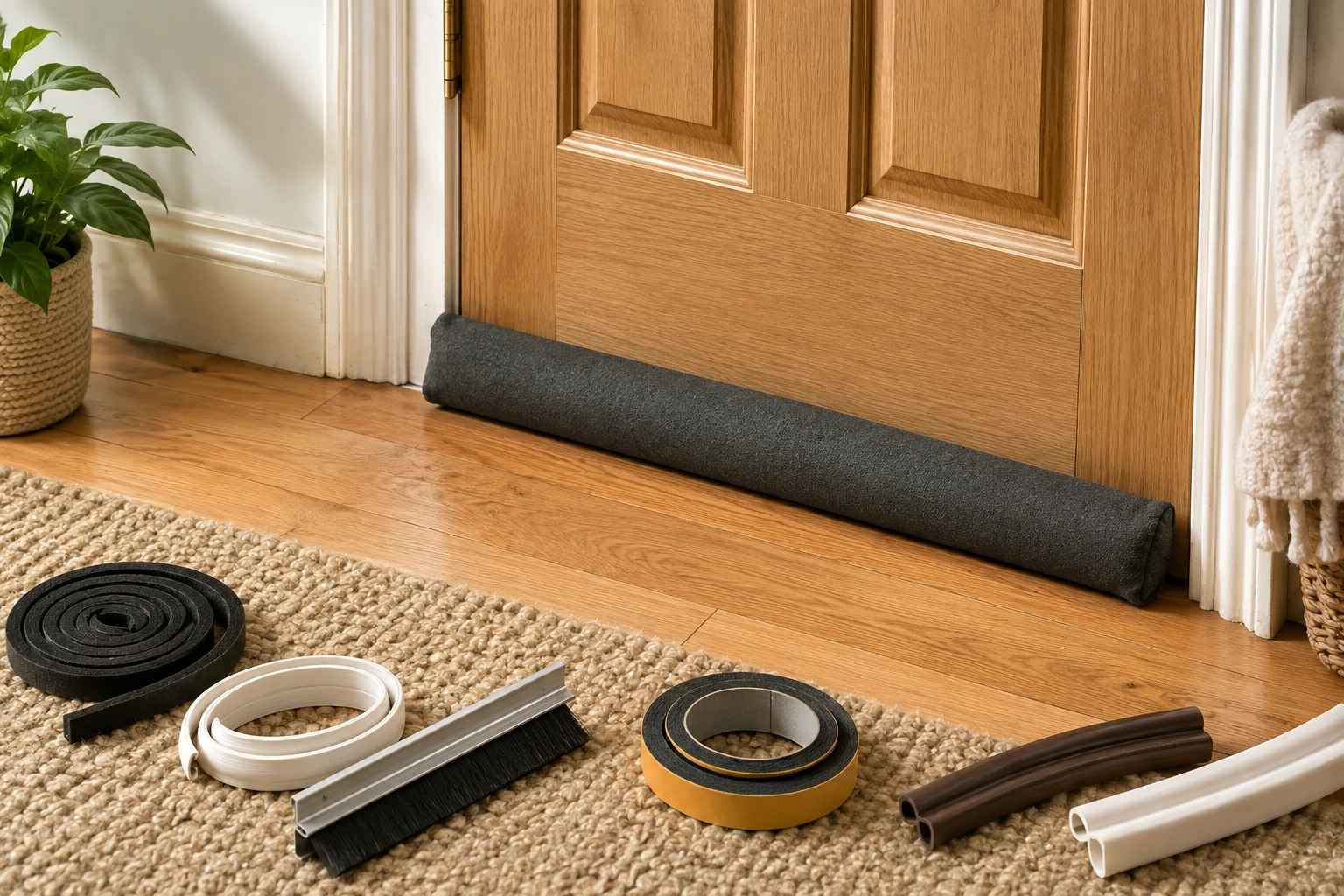
A door sweep or bottom seal can block the gap without replacing the whole door. Brush, rubber, and vinyl options are available, and the right choice depends on the surface below the door.
For a quick internal fix, an adhesive strip or fabric draught excluder may be enough. For an external front door, a screw-fixed sweep is usually more durable because it copes better with regular use and weather exposure.
To fit a bottom seal:
- Clean and dry the bottom edge of the door
- Measure the door width and trim the seal to size
- Hold it in place while the door is closed to check the height
- Fix it so the seal touches the threshold or floor without dragging heavily
- Open and close the door several times to make sure it moves freely
If the door catches on the floor after fitting the seal, do not force it. That can strain the hinges and make the alignment worse.
3. Adjust Loose Hinges And Door Alignment
Sometimes the door itself is not the problem. A few millimetres of movement at the hinges can create a visible gap at the side or top of the door. You may notice that the latch no longer lines up cleanly, the door needs lifting to close, or the gap is wider at one corner.
Start by tightening the hinge screws. If the screws spin without gripping, the holes may be worn. Longer screws can sometimes pull the hinge back into the frame more securely, especially when the original screws are short.
You can also check whether the door is sitting square in the frame. Uneven gaps usually point to alignment issues rather than failed seals alone. A small adjustment can often improve the fit enough to stop the draught and help the lock work properly again.
Be careful with major hinge adjustments if the door is heavy, glazed, or difficult to support. A poorly adjusted door can damage the frame or make the locking system unreliable. If cold air persists despite fresh seals, the door may have dropped out of square and need door alignment and hinge repairs to pull it flush against the frame again.
Suggested read: Professional Door and Window Repairs: Why You Should Avoid DIY Fixes
4. Seal Gaps Around The Door Frame
Not every draught comes through the moving part of the door. In older homes, cold air can pass between the frame and the surrounding wall, especially where old caulk has cracked or the frame has shifted slightly.
Look for gaps around the architrave, sill, and corners of the frame. Small cracks can usually be sealed with a flexible decorator’s caulk. Larger voids may need a low-expansion foam designed for doors and windows.
Use expanding foam carefully. Standard foam can swell too much and put pressure on the frame, which may affect how the door closes. Low-expansion products give more control and reduce the risk of pushing the frame out of line. When filling wider gaps, follow sensible precautions for working with expanding foam, including wearing gloves and applying a small amount first.
Once the gap is sealed, tidy the finish so the repair looks clean. A draught repair should not leave the entrance looking patched or messy, especially on a front door.
5. Check The Latch, Lock, Letterbox And Threshold
A door can still feel draughty if the latch does not pull it tight against the seal. This often happens when the strike plate is slightly out of position or the door has moved over time.
Close the door and listen to how it catches. If it rattles, sits loose, or can be pushed and pulled while latched, the door may not be compressing the seal properly. A small adjustment to the strike plate can improve the fit, but it needs to be done carefully so the lock remains secure.
The letterbox and keyhole matter too. If the main seals look intact but you still feel a cold patch around the middle of the door, check whether the letterbox flap closes tightly and whether the keyhole has a cover. A letterbox draught excluder, brush strip, or keyhole cover can stop air passing through these smaller openings.
Do not block trickle vents, airbricks, extractor fans, or fixed ventilation points while draught-proofing. Controlled ventilation helps reduce damp and condensation, and Energy Saving Trust guidance is clear that good ventilation is still essential, especially where appliances need safe airflow.
The threshold matters as well. If it is worn, loose, cracked, or set too low, the bottom seal may not have anything firm to close against. Replacing or adjusting the threshold can be a better long-term fix than adding thicker and thicker draught excluders.
This is where a practical judgement call helps. If the door is generally sound, seals and adjustments may solve the problem. If the lock, hinges, frame, and threshold are all causing issues, a more thorough repair may be needed.
Should You Use A Draught Excluder?
A fabric draught excluder can help with a small gap under an internal door or a front door that is only mildly draughty. It is cheap, quick, and easy to move.
It is not always the best fix for an external door. It can move out of place, get in the way, and does not solve side gaps, frame gaps, hinge movement, or locking issues. Treat it as a comfort measure rather than a proper repair.
Thermal curtains can also help if the door has glass panels or sits in a cold hallway. They reduce the effect of cold air, but they do not fix the source of the draught.
When A Draughty Door Needs Professional Repair
DIY fixes are useful when the problem is simple. They are less reliable when the door has moved, the frame is damaged, or the lock no longer works as it should.
Call a professional if you notice:
- Persistent gaps after replacing seals
- A door that drops, scrapes, or needs lifting to close
- A lock or latch that does not catch securely
- Cracks, rot, swelling, or water damage around the frame
- Draughts around a glazed door panel
- A front door that feels loose even when locked
SMG Hampshire handles window and door repairs across Hampshire, including glazing, uPVC windows and doors, lead lights, putty work, and general repairs. If the issue is repairable, we will always look at the practical fix before assuming the whole door needs replacing. The same repair-first thinking applies to worn components, where repair vs replacement options may solve the problem without changing the full unit. We support customers across Hampshire, including Southampton, Totton, Hythe and Waterside, Lymington, Brockenhurst, Lyndhurst, the New Forest, Winchester, Romsey, Chandler’s Ford and Hedge End.
Suggested read: Repair or Replace? SMG Hampshire’s Guide to Windows and Doors
FAQs On Fixing A Draughty Door
How do I stop a draught from the side of a door?
A draught from the side of a door is usually caused by worn weather stripping, poor latch compression, or a door that has dropped slightly on its hinges. Replace the side seal first, then check whether the latch pulls the door tightly into the frame.
How do I fix a draughty door bottom?
Fit a door sweep, brush strip, or bottom seal that closes the gap between the door and the threshold. If the gap is uneven, check the hinges and threshold before fitting a thicker seal, as the door may be misaligned.
Why is my front door still draughty after new seals?
New seals will not solve every problem. If the door is warped, the latch is loose, the threshold is worn, or the frame has gaps around it, air can still get through. Check the door alignment and frame before adding more sealant.
Can I fix a draughty front door myself?
You can usually fix minor draughts yourself with new weatherstripping, a bottom seal, hinge tightening, or caulk around small frame gaps. If the door is heavy, glazed, badly aligned, or hard to lock, professional repair is the safer option.
Is it better to repair or replace a draughty door?
Repair is usually worth trying when the door is structurally sound and the problem comes from seals, hinges, the latch, or the threshold. Replacement may be needed if the door is rotten, badly warped, severely damaged, or no longer secure.
A draughty door rarely improves on its own. Small gaps can make a hallway colder, put more pressure on heating, and leave the door feeling less secure than it should. A careful repair can often restore the fit without the cost and disruption of replacing the whole door.
Need Help With A Draughty Door?
If your door still lets in cold air after simple fixes, or the lock, hinges, frame, or threshold no longer feel right, it is worth getting it checked.
At SMG Hampshire, we provide professional door and window repairs across Hampshire, backed by over 30 years of glazing experience. We can assess the cause of the draught, explain whether repair is realistic, and carry out the work needed to make the door close properly again.
To ask a question or request a quote, contact SMG Hampshire, call 07850 239012, email info@smghampshire.co.uk, or send a quick message on WhatsApp.